
Self-Storage Facility Roofing in Kansas City, MO
Commercial roofing for self-storage facilities, mini-storage buildings, and climate-controlled storage properties throughout Kansas City, MO.
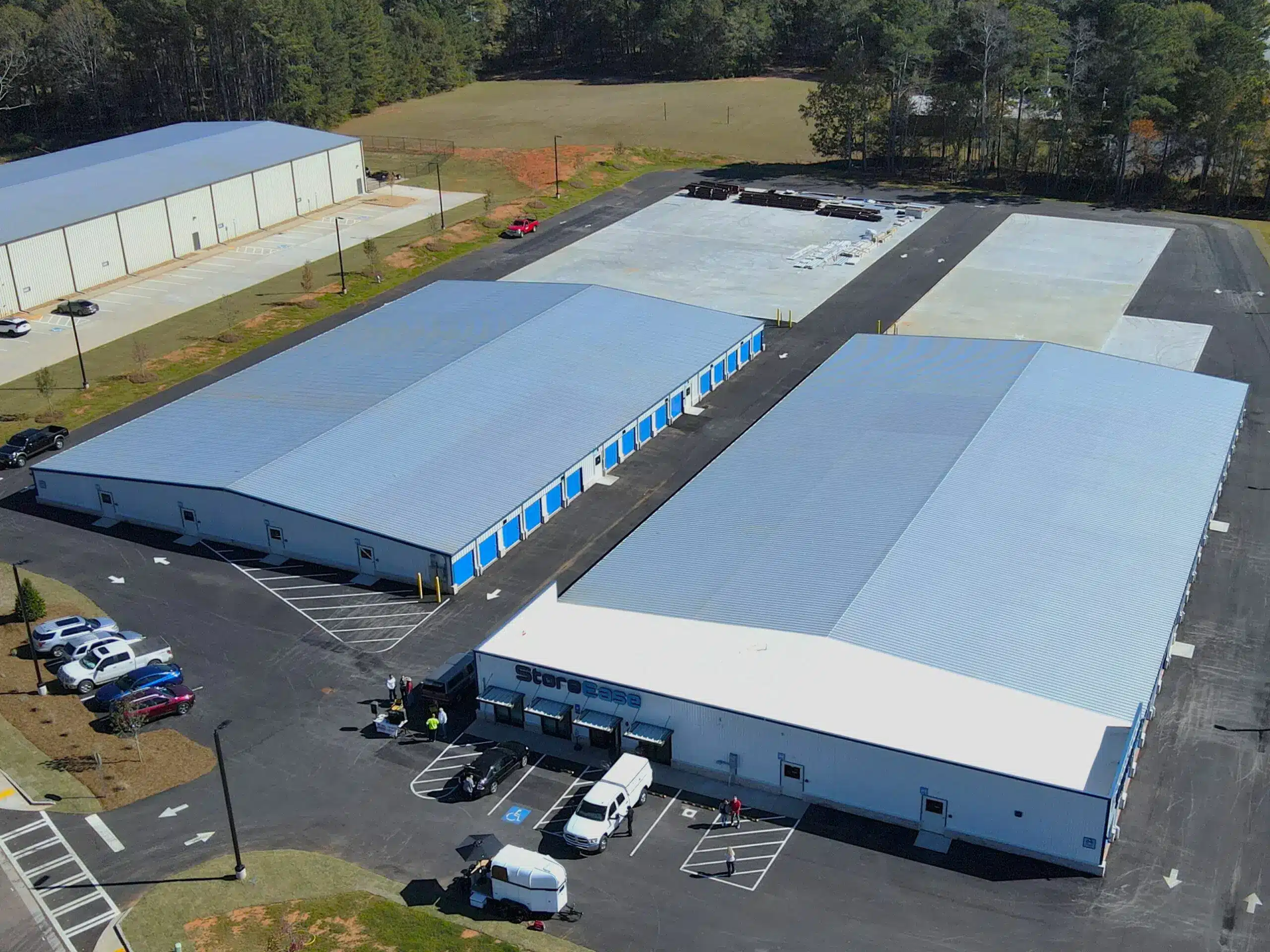
Price Self Storage operates multiple facilities in the Kansas City metropolitan area, with locations on both the Missouri and Kansas sides of the state line serving the metro's residential, commercial, and industrial storage demand. Kansas City's position in the heart of Tornado Alley and the central United States weather corridor means that self-storage roofs here face one of the most varied and severe weather profiles in the country, violent spring thunderstorms capable of producing large hail, summer heat that rivals the Deep South, ice storm winters that can coat every surface with an inch of freezing rain, and the occasional tornado that reminds operators just how serious structural roof integrity really is.
Hail is the most frequent cause of roofing insurance claims for Kansas City commercial property owners. The metro sits in a documented hail corridor where organized convective systems produce hail events multiple times per year, and the two-inch hailstones that accompany the most severe storms are large enough to puncture standard 45-mil TPO membranes, crack aged modified bitumen cap sheets, and dent and distort metal copings and flashings in ways that compromise their watertight integrity. We specify 80-mil TPO as the baseline membrane for Kansas City self-storage projects, the additional thickness provides meaningfully greater hail impact resistance compared to thinner membranes, and the incremental cost per square foot is modest relative to the reduced insurance claim frequency that operators experience.
The flat footprints of Kansas City storage buildings make them particularly vulnerable to hail events because every square foot of roof surface is directly exposed to falling stones. A single severe hail event can damage thousands of square feet of membrane on a large campus, and the damage may not be visible from the ground or even on a casual walkover inspection. We use close-up photography, core cut sampling at suspected impact sites, and, when appropriate, flood testing of sections with suspected membrane punctures to provide complete post-event damage documentation for insurance purposes.
Winter ice storms are the second major threat for Kansas City storage roofs. The metro averages several freezing rain events per year, and a significant event can deposit half an inch to an inch of clear ice across the entire roof surface. That ice adds structural load to the deck and, more critically, can dam drainage paths so that when temperatures rise and rain falls simultaneously, water has nowhere to escape. We inspect and clear drain openings before the winter season each year as part of our preventive maintenance programs for Kansas City operators.
Climate-controlled storage in Kansas City must address both ends of the temperature spectrum. July average highs near 88°F and January average lows near 21°F create a temperature swing of well over 100 degrees between the most extreme days of opposite seasons. A roof assembly that limits heat gain in summer must also limit heat loss in winter, and the insulation R-value and vapor control strategy must be optimized for this bidirectional challenge. Polyiso at R-25, with a vapor retarder positioned on the warm side of the assembly for winter vapor drive, is the standard specification for Kansas City climate-controlled storage.
Drainage planning for Kansas City storage roofs must account for the intense thunderstorm rainfall that summer convective systems deliver. A 100-year, one-hour storm event in the Kansas City area can dump over four inches of rain, and the drainage system must be capable of moving that volume off the roof without creating ponding conditions that stress the membrane and deck. We verify drain sizing against the local design storm intensities published in the Missouri and Kansas plumbing and drainage codes, and we flag any drainage deficiency for correction before new membrane is installed.
Severe thunderstorm wind is a year-round concern in Kansas City, and roof edge systems must be specified and installed to resist the wind uplift loads that these storms generate. FM-approved edge metal systems, copings, gravel stops, and fascia, with documented resistance ratings for the Kansas City design wind speed are specified on all projects. Perimeter nailer boards must be mechanically attached at intervals that satisfy the FM uplift requirements for the specific roof zone, and we verify field attachment patterns match the design during installation.
Our Kansas City roofing team works on both the Missouri and Kansas sides of the metropolitan area, and we maintain contractor licenses in both states. For multi-state portfolio operators with facilities in both Greater Kansas City, Missouri and Overland Park, Lenexa, or Olathe, Kansas, we provide unified service under a single contract with consistent standards regardless of which side of the state line a facility sits on.
Manufacturer certifications from Carlisle, Firestone, and GAF enable us to issue NDL warranties on qualifying new installations. Our post-hail inspection documentation is formatted for use with commercial property insurance claims and meets the requirements of the major insurers who cover Kansas City commercial properties. We coordinate all permit applications and required inspections through the applicable jurisdiction, Kansas City, Missouri; Kansas City, Kansas; or the applicable suburban municipality.
- What membrane thickness is recommended for Kansas City storage roofs given the hail risk?
- We recommend 80-mil TPO as the baseline for Kansas City self-storage. The additional thickness compared to 60-mil provides meaningfully better hail impact resistance and a longer expected service life given the frequency of hail events in the metro area.
- How do I document hail damage on my Kansas City storage roof for an insurance claim?
- We provide a post-storm inspection report with close-up photography of all impact damage, core cut sample data showing any membrane punctures, and a quantified damage area assessment. This documentation meets the requirements of commercial property insurers for claim submission.
- What should I do to prepare my Kansas City storage roof for winter?
- Schedule a fall inspection in October to clear all drain openings, inspect parapet copings and edge metal for any looseness that winter ice expansion could worsen, and check membrane flashings at penetrations for any sealant shrinkage that occurred during summer heat.
- Does Kansas City's severe weather season affect when I should schedule a re-roofing project?
- April through June is peak severe weather season and the least predictable weather window for scheduling large roofing projects. We recommend scheduling full re-roofing projects for July through October when convective storm frequency drops and weather windows are more consistent.
- Can one roofing contractor handle facilities on both sides of the Missouri to Kansas state line?
- Yes. We maintain contractor licenses in both Missouri and Kansas and regularly service the full Kansas City metropolitan area under unified contracts for multi-location storage operators.
Ready to talk through a roof?
Tell us about the building and the roof problem. We'll document it and put a plan in writing, with an honest repair-vs-replace recommendation and no upsell pressure.
Get a Roof Assessment →