
Humidity & Trapped Moisture Roof Repair in Kansas City, MO
Humidity damage roof repair in Kansas City, MO. We diagnose blistering, ridging, and saturated insulation from interior moisture and failed vapor barriers, then fix the cause from the deck up.
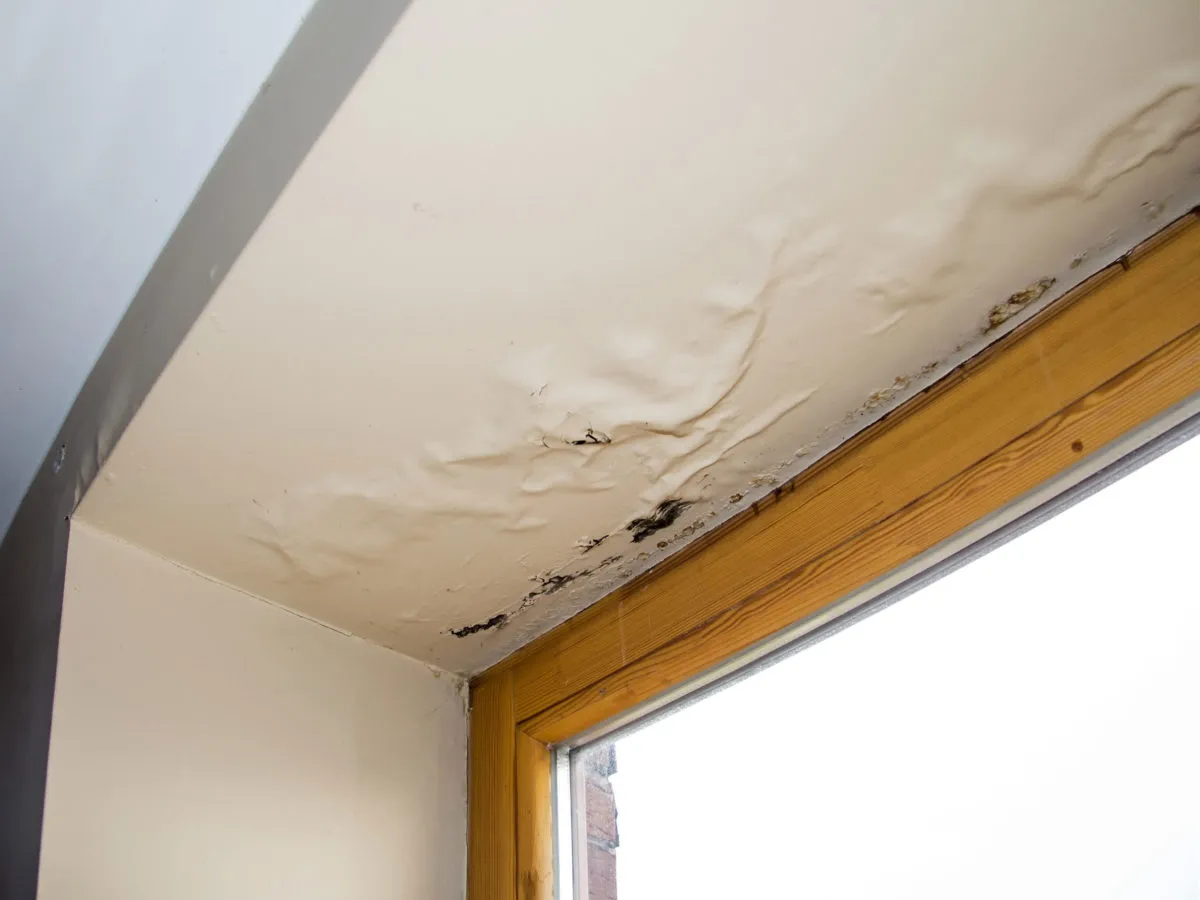
A wet roof is not always a leaking roof. Some of the worst moisture damage we open up in Kansas City buildings, the natatoriums at municipal rec centers, the food and beverage plants in the East Bottoms and along the Blue River industrial flats, the commercial laundries and kitchens behind the hotels near the airport, never let a single drop of rain past the membrane. The water came from inside the building, carried up into the roof on humid air until it hit something cold and condensed. By the time it surfaces as a blister or a soft, spongy patch, the damage underneath is usually well past what you can see from the top.
How interior air ends up as water in your roof
Buildings that run humid inside, anything with pools, commercial kitchens, locker rooms, food processing, greenhouses, or dense occupancy, push warm, moisture-heavy air up toward the roof deck. That vapor drives through the deck and into the insulation. When it reaches a layer cold enough to fall below the dew point, often the underside of the membrane on a January night, it condenses into liquid water inside the assembly where nothing can carry it away. A vapor retarder is supposed to stop that air before it ever climbs that high. But when a building never had one, or its retarder is torn, lapped backward, or sitting on the wrong side of the insulation, the moisture slides right past and pools where it can't drain. Unlike a rain leak that waits for a storm, this runs day after day no matter the forecast, which is exactly why the damage keeps compounding.
The four signatures of humidity damage
These failures look different from storm or wear damage, and once you have seen them they are hard to miss:
- Blistering. Vapor pressure builds between the membrane and its substrate and lifts the sheet into raised bubbles. On built-up and modified roofs the blisters can grow large; on single-ply they read as soft, spongy domes.
- Ridging. On built-up roofs, moisture in the felt plies swells and shrinks them until the membrane buckles into long ridges that track the insulation joints, a textbook tell that water is working inside the assembly.
- Saturated insulation. The board soaks up condensate, sheds most of its R-value, compresses underfoot, and simply stays wet. You feel it as low, squishy areas with no spring when you cross the roof.
- Deck corrosion and rot. Steel decks rust from the top side where saturated insulation sits on them for years; wood decks soften and delaminate. This is the stage where a roofing repair turns into a structural one.
Mapping the wet areas before we cut anything
We do not open a roof and hope. An infrared survey, flown or walked after sunset while wet insulation still radiates the day's heat and reads warmer than the dry board around it, maps where the moisture sits and how far it reaches across the roof. We confirm those thermal findings with core cuts that reveal the real insulation condition, the deck below it, and whether a vapor retarder exists and where it lives in the stack-up. On any Kansas City building running high interior humidity that has not had a documented moisture survey in the last few years, this is where we begin, because moisture caught at the survey is a patch and moisture caught after it has corroded the deck is a tear-off.
Repairing the cause, not painting over the symptom
Here is the mistake we see constantly: a contractor recovers over a humidity-damaged roof without touching the vapor problem, and the brand-new assembly fills with water exactly the way the old one did. Kansas City's climate generally drives vapor upward from the heated interior through the long winter, which means a working vapor retarder belongs low in the assembly, near the deck, not up under the membrane where it would trap the condensation it is meant to block. When we repair humidity damage we strip out the saturated insulation and replace it with dry board, correct or add the vapor retarder so it works with the building's physics instead of against them, restore the membrane, and re-detail the edge metal and flashings across the affected zone. Where the wet areas are isolated and the surrounding board tests dry, that is a targeted cut-and-patch. Where moisture has spread under a large share of the roof or the deck is already corroding, the honest answer is a full replacement with the vapor strategy rebuilt correctly from the deck up.
Why waiting is the expensive option
Humidity damage does not sit still. Saturated insulation carries almost no thermal value, so the building bleeds conditioned air straight through the roof and the HVAC grinds harder and costs more every month the problem rides. The wet board keeps the deck wet, and the steel keeps corroding for as long as the moisture stays. A roof reading fifteen percent wet coverage today can climb to forty or fifty percent two seasons on, and the manageable repair you could have made becomes the replacement you now have to make. Catching it at the survey stage is, almost every time, the cheaper road.
Humidity & Moisture Damage Repair Questions
An infrared survey run after sunset is the standard tool. Wet insulation holds the day's heat longer than dry insulation, so it reads warmer in the thermal image and shows up as a distinct zone even when the membrane above looks fine. We confirm the thermal findings with core cuts, which also reveal insulation compression, deck condition, and where the vapor retarder sits in the stack-up.
Humid interior air drives upward through the roof and condenses when it meets a cold layer inside the stack-up. A vapor retarder is meant to stop that air, but when it's missing, damaged, or placed above the insulation instead of near the deck, the moisture gets past it and collects in the board. Because it's driven by interior humidity rather than rain, it builds regardless of the weather.
If the wet areas are isolated and the surrounding insulation tests dry, yes, we cut out the saturated board, replace it with dry material, correct the vapor retarder, restore the membrane, and re-seal the flashings in that zone. Full replacement is the call once moisture has spread under roughly a quarter or more of the roof or the deck has begun to corrode. We give you both the repair and the replacement numbers after the survey.
In Kansas City's climate the vapor drive runs generally upward from the heated interior in winter, so the retarder belongs low in the assembly near the deck. Put it up under the membrane and it traps the condensation instead of blocking it. Recovering over a roof without fixing a misplaced retarder just rebuilds the same moisture trap in the new assembly.
Steadily, and it compounds. Saturated insulation loses its R-value, so the building loses conditioned air and HVAC costs climb, while the wet board keeps the deck corroding. A roof at fifteen percent wet coverage can reach forty or fifty percent within two seasons, turning a repair into a full replacement. Addressing it at the survey stage is the cheaper path.
Ready to talk through a roof?
Tell us about the building and the roof problem. We'll document it and put a plan in writing, with an honest repair-vs-replace recommendation and no upsell pressure.
Get a Roof Assessment →