
REIT Roofing Services in Kansas City, MO
Commercial roofing programs for REITs and institutional real estate investors managing commercial property portfolios throughout Kansas City, MO.
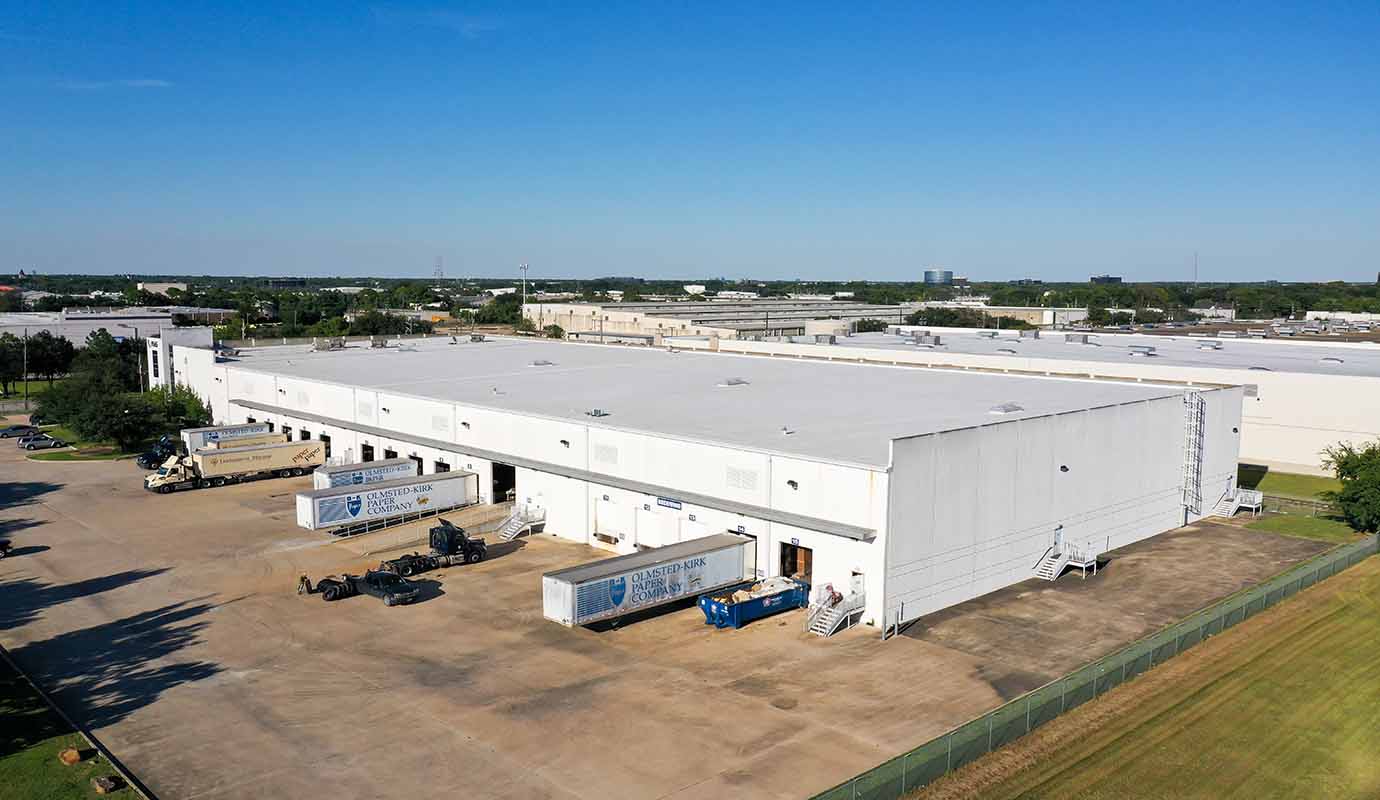
Kansas City sits squarely in the crosshairs of REIT value-add activity, with firms like Broadstone Net Lease steadily acquiring industrial flex, retail strip, and mixed-use properties across the metro's suburban corridors. For portfolio managers overseeing multi-site holdings in markets like Overland Park, Independence, and Lee's Summit, roofing is rarely glamorous until a reserve shortfall hits the quarterly investor call. A single deferred re-roof on a 40,000-square-foot industrial asset can cascade into waterproofing claims, tenant abatement requests, and a CapEx surprise that analysts flag immediately. Establishing a master service agreement with one trusted Kansas City commercial roofing contractor is how disciplined asset managers protect NOI before the problem surfaces.
Multi-property preferred vendor programs give REIT portfolio managers pricing leverage and service consistency that ad-hoc bidding never can. When your regional footprint includes eight to twenty properties scattered across the Kansas City MSA, negotiating volume pricing on TPO membrane, standing-seam metal, and modified bitumen systems means meaningful basis-point improvements on property-level margins. A single MSA with fixed labor rates, defined response SLAs, and pre-agreed scope language for both emergency calls and planned replacements eliminates the procurement friction that burns asset managers' time and delays capital deployment.
Deferred roof maintenance is a silent NOI killer. In Kansas City's value-add secondary market, many acquisitions carry roofs that are years past their serviceable life but still appear functional on a surface inspection. The moment tenants begin reporting leaks, the landlord faces a choice between rapid repair spend and the slower erosion of occupancy and renewal probability. REIT accounting teams must then determine whether the corrective work qualifies as a CapEx improvement or an OpEx repair, a distinction that affects depreciation schedules, investor reporting, and quarterly EBITDA presentation.
Ten-year roof reserve modeling is a non-negotiable deliverable for institutional asset management. Kansas City's continental climate means roofs face genuine thermal cycling stress: summer heat pushing 100°F and winter freezes well below zero create expansion and contraction cycles that accelerate membrane fatigue. A credible reserve model accounts for remaining useful life by system type, replacement unit costs indexed to local labor markets, and a capital sequence that avoids clustering major expenditures in the same fiscal year. When presented to investment committee or included in supplemental REIT disclosures, that model signals operational sophistication.
Property condition assessments prior to acquisition close are where roof intelligence either prevents a bad deal or allows buyers to negotiate seller credits. In Kansas City's active industrial and retail acquisition market, PCAs too often rely on generalist inspectors who lack the technical depth to identify underlying insulation failure, ponding risk on low-slope systems, or coating degradation that will require full replacement within 18 months. Engaging a specialized commercial roofing contractor for a pre-close technical review, separate from the standard PCA, gives underwriting teams the data granularity needed to build accurate pro formas.
The CapEx versus OpEx determination matters significantly for REIT reporting structures. Under NNN lease structures common in Kansas City retail and industrial portfolios, tenants bear roof maintenance responsibility up to defined thresholds, with the landlord absorbing structural replacement costs. Gross leases shift the full burden to the asset. Misclassifying a full system replacement as a repair creates audit exposure; misclassifying a routine repair as CapEx inflates the capital improvement line without corresponding benefit. A roofing contractor with REIT client experience understands how to document scope in ways that support clean accounting treatment.
Managing multiple contractor relationships across a Kansas City portfolio is operationally expensive in ways that don't show up on a single invoice. Bid coordination, scope comparison, warranty tracking, insurance certificate management, and emergency dispatch protocols all consume property management bandwidth. Consolidating to a single preferred vendor with proven multi-site capacity returns that bandwidth to higher-value work. It also creates a consistent warranty and documentation chain that supports due diligence when assets are eventually sold or refinanced.
Kansas City's secondary-market dynamics mean acquisitions often price below replacement cost, which creates pressure to defer capital improvements and maximize near-term cash yields. That strategy only works when the roof inventory is accurately mapped and prioritized. An asset manager who inherits a portfolio without a credible roof condition register is flying blind on one of the largest single CapEx line items in any building. Annual inspections and condition scoring, delivered by a contractor who knows the local building stock and climate exposure, transform roof management from reactive to strategic.
For REIT portfolio managers active in Kansas City, the value proposition is straightforward: one contractor, one MSA, one point of accountability across your entire metro footprint. Roof conditions get reported consistently, reserve models stay current, and emergency response happens without the delay of re-qualifying a new vendor mid-crisis. That operational reliability protects distributions, supports accurate investor reporting, and keeps properties performing at underwritten yields through the full hold period.
- How does a multi-property preferred vendor program work for a REIT with Kansas City assets?
- A preferred vendor program establishes a master service agreement covering all your Kansas City properties under a single contract, with pre-negotiated pricing on materials and labor, defined inspection schedules, emergency response SLAs, and consistent documentation standards. This eliminates per-property bidding, ensures uniform service quality across your portfolio, and simplifies warranty and insurance certificate management for your asset management team.
- What is the NOI impact of deferred roof maintenance on a commercial property?
- Deferred roof maintenance reduces NOI through multiple channels: tenant abatement claims triggered by active leaks, accelerating repair costs as minor issues compound, reduced renewal probability as tenants weigh roof-related disruptions, and ultimately higher replacement costs when deferred systems fail catastrophically. In a REIT context, these impacts flow directly to distributable cash flow and, if material, may require disclosure in investor reporting.
- How should a REIT structure a 10-year roof CapEx reserve model for Kansas City properties?
- A credible 10-year model assigns remaining useful life to each roof system in the portfolio, applies current replacement cost per square foot indexed to local Kansas City labor and material markets, sequences replacements to avoid capital clustering, and includes an inflation escalator for out-year costs. The model should be refreshed annually following post-inspection condition updates and presented to investment committee as part of the annual asset management review.
- What should a REIT require from a property condition assessment regarding roofing?
- Standard PCAs often lack the technical depth required for institutional-grade roof due diligence. REITs should supplement or replace the generalist roof section with a report from a specialist commercial roofing contractor covering system type, installation date, observable deficiencies, estimated remaining useful life, and a cost estimate for near-term repairs and eventual replacement. This data feeds directly into acquisition pro formas and seller credit negotiations.
- How does a master service agreement simplify REIT roof management across a Kansas City portfolio?
- An MSA establishes a standing contractual relationship that covers scope definitions, labor and material pricing, insurance requirements, warranty terms, and escalation procedures, eliminating the need to negotiate new terms for each project. For a REIT with multiple Kansas City assets, this means faster mobilization on emergency work, consistent documentation for CapEx substantiation, and a single vendor relationship that asset managers can rely on across the full portfolio lifecycle.
Ready to talk through a roof?
Tell us about the building and the roof problem. We'll document it and put a plan in writing, with an honest repair-vs-replace recommendation and no upsell pressure.
Get a Roof Assessment →