
Aerospace & Defense Facility Roofing in Kansas City, MO
Commercial roofing for aerospace and defense facilities in Kansas City, MO, Honeywell Federal Manufacturing & Technologies (NNSA Nuclear Weapons Component Plant).
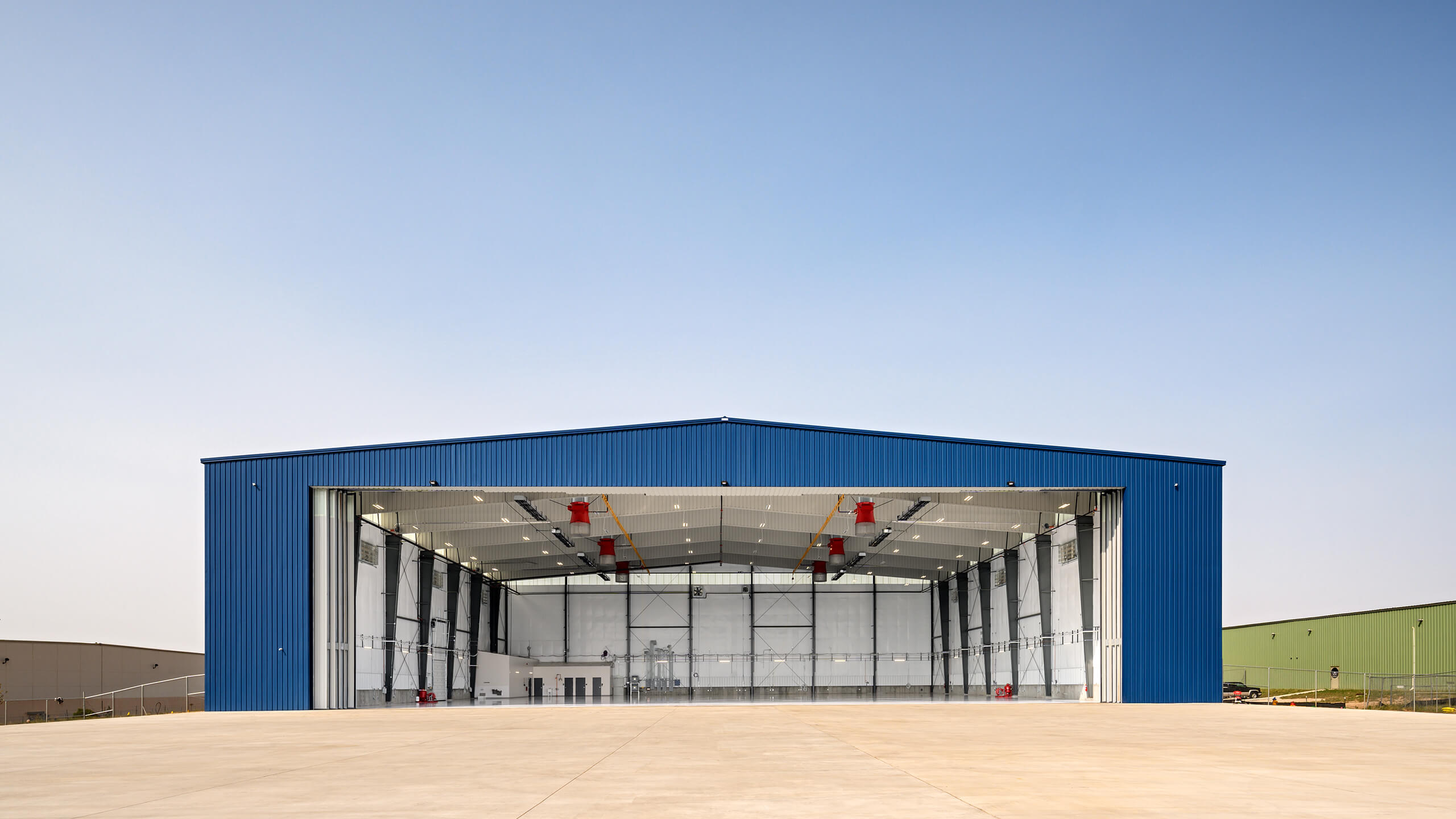
Major Aerospace and Defense Facilities in the Kansas City Area
- Honeywell FM&T / Kansas City National Security Campus (NNSA Nuclear Weapons Manufacturing), The nation's primary non-nuclear components manufacturer for the US nuclear weapons stockpile, operated by Honeywell Federal Manufacturing & Technologies under DOE/NNSA contract, a 1.5 million sq ft facility in the South Loop
The Kansas City National Security Campus, one of the largest federally-owned commercial buildings in the US dedicated to classified manufacturing, represents one of the country's most consequential single-site roofing maintenance projects, with federal security and performance standards governing all facility work.
The roofing systems on aerospace and defense structures carry stakes beyond weather protection. A failure over an active manufacturing floor, whether that means a fighter jet assembly line, a missile guidance lab, or a satellite integration cleanroom, can trigger production shutdowns, contaminate precision components, or compromise facility certifications. The zero-tolerance standard these clients apply to their primary mission is the same standard we apply to the roof above it.
Our defense and aerospace roofing work includes planned replacement, emergency roof repair under time-critical operational constraints, and new construction roofing for facility expansions. We carry the insurance coverage, bonding capacity, and documented quality procedures that federal facility managers and prime contractor subcontract teams require. When a facility expansion schedule is tied to a DOD delivery milestone, "we'll get to it" is not a close-out answer, we staff to the schedule and document every phase.
Aerospace & Defense Roofing Questions
Yes. We work with facility security officers to complete the necessary base access credentialing for our crew members. Lead time for clearance varies by installation, we factor it into the project schedule upfront rather than discovering it during mobilization.
We provide full prevailing wage certified payroll (if applicable), material submittals for spec compliance, daily logs, third-party inspection coordination, LEED or sustainability documentation if required, and a final warranty package formatted for federal facility records systems.
We develop a phased work plan with the facility manager and base operations officer, sectioning the roof into work zones, maintaining dry-in protection on any open sections, and scheduling loud or disruptive work during approved windows. Our pre-construction checklist includes noise, vibration, dust, and chemical exposure considerations for every zone adjacent to active operations.
We work on the building envelope, roofs, walls, and flashings, which in most cases does not require classified access. For facilities where roof access itself requires a clearance, we identify that requirement early and work with the government contracting officer to plan accordingly.
TPO and PVC membrane systems are most common for new and re-roofing work due to their resistance to chemical splash and UV degradation. Standing seam metal is preferred on high-bay structures where long-term performance and minimal maintenance are prioritized. We always match the system to the specific exposure, a satellite integration cleanroom has different requirements than a motor pool.
Kansas City occupies a transition zone between humid continental and humid subtropical climate classifications. The city experiences the full range of North American weather extremes: summer heat index values exceeding 105°F, winter lows below 0°F, and a thunderstorm season that produces hail, tornadoes, and straight-line wind events from spring through fall. Average annual snowfall exceeds 17 inches, and the freeze-thaw cycle that accompanies Kansas City's shoulder seasons creates significant stress on roofing membranes, particularly at lap seams and flashing terminations where differential movement concentrates stress. Data center operators in Kansas City live with the full scope of North American weather risk, and their roofing specifications must reflect that reality.
The H&R Block data center in Kansas City processes millions of tax returns during the peak January-to-April filing season, a period that coincides with Kansas City's most volatile weather window. Ice dams, freeze-thaw membrane damage, and winter storm infiltration events are real risks during exactly the period when the facility can least afford operational disruption. Our approach to mission-critical facilities with seasonal operational peaks includes a targeted pre-season inspection each fall, verifying seam integrity, drain condition, and flashing adhesion before winter temperatures arrive, and a post-season inspection each spring to document and address any freeze-thaw damage before the summer thunderstorm season begins.
Oracle Health's KC campus facilities present the roofing complexity characteristic of large healthcare IT environments: multiple buildings of different ages and construction types, rooftop mechanical systems that have been added and modified over decades, and interior environments that must maintain strict temperature and humidity control to meet HIPAA-compliant data center operating standards. Re-roofing older Cerner campus buildings requires a building-by-building assessment that evaluates deck condition, existing insulation R-value, slope and drainage adequacy, and the structural capacity to support new insulation layers. Many older Kansas City commercial buildings have structural steel decks that can accommodate additional insulation depth, while others have lightweight concrete decks that require careful load calculations before additional dead load is added.
The T-Mobile network operations legacy in Kansas City includes co-location and network management facilities that share some characteristics with carrier hotels: dense conduit and cable penetration arrays, 24/7 operational requirements, and extreme sensitivity to moisture near active switching and networking equipment. For these facilities, pre-construction penetration mapping is as important as any membrane specification decision. Our pre-construction survey teams use photographic documentation and scaled drawings to catalogue every penetration, so that the re-roofing plan can be executed without cutting into active conduit runs or disturbing fiber cable management systems. The same documentation package serves as the permanent record for future maintenance and re-roofing projects.
Wind design for Kansas City must account for tornado risk in a way that most coastal markets do not address directly. While a direct tornado strike is rare, the peripheral wind field of an EF-1 or EF-2 tornado passing through the metro can generate localized wind speeds well above the standard ASCE 7 design values for the region. More practically relevant are the straight-line wind events that accompany squall lines, 70 to 80 mph recorded gust events are not rare in the Kansas City area during severe thunderstorm season. Our membrane specifications for Kansas City data centers use FM Global 1-90 as a baseline, with perimeter and corner zone enhancement to account for the realistic local wind environment rather than just the code-minimum design values.
Hail damage is a persistent roofing maintenance issue in Kansas City. The central United States is the most hail-active region in the world, and Kansas City sits near the northern edge of the region frequently called "Hail Alley." Hailstone diameters exceeding 1.5 inches, large enough to dimple or crack standard TPO membranes, are recorded in the KC metro multiple times per decade. Hail-resistant membrane specifications using reinforced or KEE-based membranes, or thicker 80-mil TPO, provide substantially better resistance to impact damage. For data center operators, the incremental cost of a hail-resistant specification is typically offset by reduced repair frequency and by insurance underwriter credits that some carriers offer for FM Global impact-rated assemblies.
Energy efficiency is a meaningful financial concern for Kansas City data center operators, who face both summer cooling costs and winter heating costs on a scale that more temperate markets do not. Cool roof membranes with high solar reflectance reduce summer cooling loads, but their effect on winter heating loads is modest because Kansas City's winter solar radiation intensity is relatively low. The net annual energy benefit of a reflective membrane in Kansas City is real and positive, heat pumps and precision cooling units run significantly fewer hours per year on a cool roof than on a dark membrane, but the benefit calculation must account for the full annual climate cycle rather than assuming summer savings alone justify the investment.
Planned maintenance for Kansas City data centers should include a thermographic infrared survey after the first winter following any major re-roofing project to verify that no moisture infiltrated the new assembly during construction. Construction-related moisture, whether from rain events or from incompletely dried adhesives, can be trapped beneath a new membrane and degrade polyisocyanurate insulation silently over several years. An early thermographic baseline survey establishes the expected thermal pattern of the new assembly, making future surveys far more interpretable and making any anomalous moisture accumulation easier to detect and address before it reaches critical mass.
Kansas City's position as a central U.S. data center hub, connecting the eastern and western carrier network architectures, anchoring Oracle Health's national healthcare IT platform, and supporting H&R Block's critical seasonal operations, will continue to attract data center investment for the foreseeable future. Each new facility and each aging roof that requires re-roofing is an opportunity to bring the best available materials, specifications, and installation practices to bear on a problem that matters enormously: keeping one of the country's most important data infrastructure concentrations dry, thermally efficient, and operational through every kind of weather the North American continent can deliver.
Frequently Asked Questions: Data Center Roofing in Kansas City
How does Kansas City's severe weather risk affect data center roof specifications?
Kansas City's combination of hail, straight-line winds, tornadic activity, and freeze-thaw cycles demands a more robust specification than mild-climate markets. FM Global 1-90 wind uplift with enhanced perimeter conditions, hail-resistant 80-mil or reinforced membrane, and freeze-thaw rated flashing details are the appropriate baseline for mission-critical data centers.
When is the best time to re-roof a Kansas City data center to minimize weather risk?
Late summer through early fall, August through October, is generally the best installation window in Kansas City. Temperature and humidity conditions favor adhesive performance, severe weather frequency is declining from the summer peak, and the work can be completed and cured before winter freeze-thaw cycles begin.
How do we manage re-roofing on an Oracle Health or similar large multi-building campus?
Building-by-building assessment is the starting point, followed by a phased project plan that sequences work across buildings based on condition priority, operational impact, and budget. Each building gets its own structural, insulation, drainage, and membrane specification rather than applying a uniform solution across buildings with different ages and construction types.
What hail resistance ratings are available for data center roof membranes in Kansas City?
FM Global's Severe Hail (SH) approval and UL 2218 Class 4 ratings are available for select reinforced TPO and KEE membrane systems. These ratings significantly reduce damage frequency in Kansas City's hail environment and may qualify for property insurance credits with some carriers.
How soon after re-roofing should we schedule a thermographic inspection?
After the first winter season, approximately six to nine months after substantial completion. The thermal contrast needed for accurate infrared imaging is best achieved when interior and exterior temperature differentials are at least 18°F, which means winter inspections in Kansas City are the most informative baseline surveys.
Ready to talk through a roof?
Tell us about the building and the roof problem. We'll document it and put a plan in writing, with an honest repair-vs-replace recommendation and no upsell pressure.
Get a Roof Assessment →