
Office Building Roofing in Kansas City, MO
Commercial roofing for Class A, B, and C office buildings, suburban office parks, and downtown towers throughout Kansas City, MO.
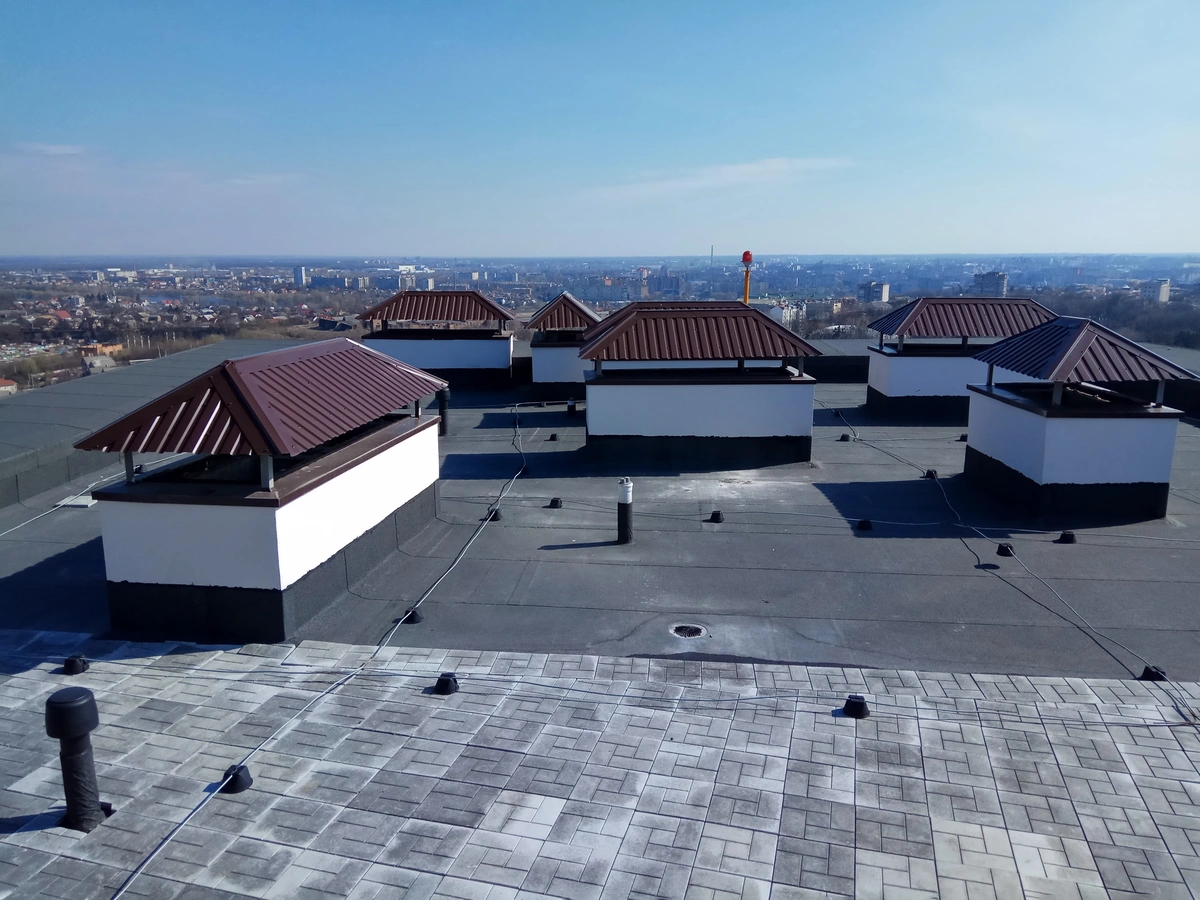
Hallmark Cards' global headquarters at the Crown Center complex in Kansas City, Missouri represents one of the nation's most distinctive corporate campus environments, a multi-building, mixed-use development that has set the aesthetic and operational standard for Class A office real estate in the KC metro for decades. The Kansas City office market spans both sides of the state line, with Class A towers in the Country Club Plaza, Westport, and Sprint campus corridors in Missouri and the growing office concentrations along College Boulevard and 119th Street in Johnson County, Kansas. Commercial roofing on occupied Kansas City office buildings requires navigating both states' regulatory frameworks and one of the Midwest's most climatically variable environments.
Occupied-building protocols for Kansas City office re-roofing are shaped by the metro's severe weather risk, which includes tornadoes, hail events, ice storms, and the rapid temperature swings that characterize the central Plains climate. Contractors working on occupied KC office buildings maintain storm preparedness protocols more detailed than those required in most markets, including defined procedures for securing materials against tornado-force winds with little warning, emergency communication chains with building management, and pre-positioned tarping crews that can protect open-deck areas within minutes when NWS tornado warnings are issued for the metro area. This level of preparedness is not optional in a market that has experienced significant tornado touchdowns within the urban core.
Green roof installations have found enthusiastic adoption among Kansas City's Class A office community, driven partly by genuine sustainability commitment and partly by the stormwater management benefits that are particularly valuable in a city that has invested heavily in combined sewer overflow reduction programs. Green roofs that qualify under Kansas City's green infrastructure program can receive stormwater fee reductions, and buildings in the Country Club Plaza and Power & Light districts have used green roof sections to support LEED certification and to create visible sustainability amenities visible from adjacent commercial areas.
Multi-RTU coordination on Kansas City office buildings requires sequencing plans that account for both summer cooling and winter heating needs. The metro's climate extremes, summer highs above 100°F and winter lows below 0°F, mean that there is essentially no season when at least some RTUs are not critical to tenant comfort. Spring and fall are the best windows for major RTU curb work, but even during these transitional seasons, sudden weather changes can create urgent heating or cooling demands. Pre-positioned portable HVAC equipment and a documented rapid-deployment protocol are prerequisites for professional occupied building re-roofing in Kansas City's unpredictable climate.
Energy code compliance for Kansas City office re-roofing spans two states with separate energy codes. Missouri and Kansas both align with IECC but have different adoption cycles and local amendments. KC office buildings in Climate Zone 4A on the Missouri side require minimum insulation and reflectance standards under Missouri's adopted energy code, while Kansas-side buildings have comparable but separately administered requirements. Contractors serving the KC market must be fluent in both states' requirements and maintain separate documentation protocols for projects in each jurisdiction.
Reflective membrane selection for Kansas City office buildings involves a climate zone analysis that differs from clearly cooling-dominated or heating-dominated markets. The KC metro's Climate Zone 4A position means that both cooling savings and heating penalties from reflective membranes are real and measurable. Energy modeling for specific buildings in the market generally supports high-reflectance membranes when combined with adequate insulation, as the extended summer cooling season benefits outweigh the modest winter heating penalties, and the insurance, aesthetic, and hail-resistance advantages of high-quality TPO reinforce the economic conclusion.
Lease renewal protection in Kansas City's competitive office market, where Johnson County suburban Class A buildings compete with repositioned Plaza-area product and downtown towers for the same tenant pool, centers on demonstrating active, professional building management. A re-roofing project that includes hail-damage resistance documentation (Class 4 UL 2218 rating) is a specific Kansas City differentiator, as commercial tenants in the market are increasingly aware of the hail risk after significant events have damaged local buildings and disrupted business operations.
Kansas City's dual-state contractor licensing landscape requires commercial roofing contractors to maintain separate compliance in Missouri and Kansas, where different permit requirements, inspection protocols, and trade licensing rules apply at the city and county level. The Overland Park, Lenexa, and Olathe building departments in Johnson County have their own permit processes distinct from Kansas City, Kansas permits, and contractors moving across the metropolitan area must manage multiple permit relationships simultaneously on portfolio projects that span the state line.
The Crown Center area and the broader Kansas City office market have seen significant repositioning investment as institutional owners compete for tenants in a market affected by work-from-home trends and changing space utilization patterns. Roofing projects that can be positioned as part of a broader building improvement narrative, energy efficiency upgrades, storm resilience improvements, green building credential enhancement, provide marketing support beyond the purely functional value of a watertight roof. Contractors who can contribute professional documentation to the building's capital improvement story add value to the relationship that exceeds the scope of the physical work.
- What severe weather protocols are required for occupied Kansas City office re-roofing?
- Tornado preparedness protocols, including procedures for securing materials against tornado-force winds with minutes of warning, emergency communication chains with building management, and pre-positioned tarping crews for rapid open-deck protection, are standard requirements in a market that has experienced urban core tornado events. These protocols go beyond what is needed in most other office markets.
- Does Kansas City's state-line location create regulatory complexity for roofing contractors?
- Yes. Missouri and Kansas have separate energy codes on different adoption cycles, and local jurisdictions on both sides of the state line, including Overland Park, Lenexa, and Olathe in Johnson County, have separate permit processes and inspection requirements. Contractors serving the KC metro must maintain separate compliance management protocols for each jurisdiction.
- What stormwater incentives support green roofs on Kansas City office buildings?
- Kansas City's green infrastructure program offers stormwater fee reductions for qualifying green roof installations, which are particularly valuable given the city's combined sewer overflow reduction investment. Buildings in the Country Club Plaza and Power & Light districts have used green roof sections to qualify for these incentives while supporting LEED certification programs.
- Why is Class 4 hail resistance particularly relevant for Kansas City office roofing?
- The KC metro is in an active hail corridor, and commercial tenants with business disruption experience from hail events increasingly evaluate building resilience during lease negotiations. Specifying 80-mil TPO with a documented Class 4 UL 2218 rating, and communicating this specification to tenants, is a differentiating feature for Kansas City office buildings in competitive lease negotiations.
- What energy code applies to a Kansas City office building re-roofing project?
- Missouri and Kansas both adopt IECC-aligned energy codes with separately administered requirements for Climate Zone 4A. Both require minimum insulation R-values and cool-roof provisions for replacement commercial roofing above 50% of the roof area. Contractors must document compliance under the specific state code applicable to each building's location.
Ready to talk through a roof?
Tell us about the building and the roof problem. We'll document it and put a plan in writing, with an honest repair-vs-replace recommendation and no upsell pressure.
Get a Roof Assessment →